

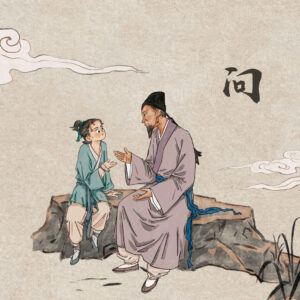
TCM Inquiry
TCM Inquiry is a method for doctors to understand the state of health and diagnose illnesses through purposeful questioning of patients or companions, and it is one of the important elements of inspection, listening and smelling, inquiry and pulse-taking.
In the Su Wen – Zhengsishilun: If the doctor does not ask patient when and how did the disease begin, if the meals are in order,sleeps well or not,or if he is injured by poison. If the doctor does not know about this first, just take the pulse, what disease can be diagnosed?”
the correct method of inquiry can help to make a rapid and accurate diagnosis of the disease.
If you don’t know how to do it correctly, you are just like talking as a chicken to a duck, and the patient won’t know what he is talking about.
What is the right way to do the inquiry? Master the following ten questions of Chinese medicine, you will be able to diagnose the patient’s condition.
1. Ask about sleep
How is your sleep?
Do you sleep until dawn?
Do you wake up regularly every day?
If so, when do you wake up?
Do you dream a lot?
Normal: sleep until dawn
Excessive or insufficient. Intermittent sleep, unrestful sleep
Hint: The liver does not collect blood or the heart blood is weak, the soul does not return to the heart
Constantly waking up at 1 to 3 o’clock
Hint: Liver Tumor is in the process of forming or has become real
Waking up from 3 to 5 o’clock
Hint: Lung Tumor is in the process of forming or has become real
2. Appetite
Do you feel hungry? Do you have the desire to eat any special food or favorite food? Or not hungry, no appetite at all.
Normal: appetite, with a taste for food
Excessive or insufficient.
Excessive
Hint: Heat in the Yang Ming meridian or under the influence of hormonal drugs
No appetite
Hint: damage to the spleen
No taste for food
Hint: damage to the pancreas
3. Stool
Are you constipated? Do you have stool every day? What is the color of your stool? Is it loose? Smelly or odorless?
Normal: daily, formed stool, not soft nor hard
Thin: watery in the middle energizer and intestinal tract
Hard: Yang-ming internal organs are solid
Downward flow of clear grain: spleen Yang deficiency
4. Urine
What color is your urine? Do you urinate frequently? Or can’t urinate? Or no urge to urinate? How many times a day on average?
Normal is: light yellow urine
Yellow or dark yellow urine: there is still dry stool in the intestines
Clear, white urine: cold inside, not enough heat in the small intestine
5. Ask about thirst
Are you very thirsty? If thirsty, what temperature of water do you want to drink most? If you are not thirsty, do you often forget to drink water? Or no matter how much you drink, you can not quench your thirst?
Normal: Sometimes feel thirsty
Not thirsty: water stops in the upper energizer or there is still unclean food left in the stomach
Thirsty and can’t be quenched by drinking a thousand glasses: Yangming meridian heat or kidney yang deficiency that prevents Lung gold from producing water
Thirsty and want to drink ice water: internal heat
Thirsty, want to drink warm water: cold
6. Ask about sweating
Do you sweat easily? Do you have night sweats in the middle of the night? Do you sweat a lot? Or do you hardly sweat?
Normal: sweat easily in the heat or exercise
Excessive sweating: deficiency of surface Yang, unable to protect the surface
No sweating: the heart cannot control five fluids because of the impaired heart function
7. Ask about the body is feeling hot or cold when sleeping
normal is: no special feeling.
Cold all over the body: Yang deficiency
hot on top and cold underneath: yin and yang divided
Cold and heat together: Yin and Yang fighting each other
Hot and dry all over the body: Yang does not enter Yin (chronic low fever)
8. Temperature of the feet
Do you usually feel very hot or very cold? Are your hands and feet cold?
Normal is: warm
Ice: insufficient heart yang, the heat from heart to the small intestine is insufficient
9、Menstruation -must ask about menstruation for womenIs your menstruation delayed or early every time? Is it painful? Have you ever had a baby?
(Note: Menstruation is the milk, when the heart Yang is not enough, the milk in the lungs can not be all or on time to the uterus and discharge )
Normal is: regular monthly, no discomfort
Premature menstruation: heat in the interior
Delayed menstruation: Cold in the interior
Menstrual pain or clots: cold inside
10、Strength
Are you in good spirits? Or are you tired all the time? When you wake up in the morning, do you feel good? Or are you unable to get up? Can you concentrate? How about the sexual function.
Normal: good physical strength
Poor physical strength: Insufficient heavenly yang so that lung yang cannot reach down to the kidneys. Or Insufficient innate kidney yang. Therefore, feeling fatigue all the time.
He who can know Yin and Yang can be a doctor. In the diagnosis and inquiry, the great method of yin and yang is applied at all times to determine the disease.
In fact, the ten inquiries in Chinese medicine are to collect the deficiency or excess of yin or yang of the patient, and only when the deficiency or excess of yin or yang is known will there be a direction to prescribe medicine.
What can be seen is yin, and what cannot be seen and functional is yang. When yin and yang are in harmony, yang is submerged in yin, so the yang side is cool, such as the back of the hand and forehead, while the yin side is warm, such as the palm of the hand is warm. When yin and yang are out of balance, if yang does not enter yin, the body will feel hot and dry; when yin and yang are in harmony, the body will feel hot on top and cold on the bottom; and when yin and yang are fighting each other, the patient often has the phenomenon of both hot and cold, so from the change of yin and yang, we can also know whether the patient is in the aggravation or decrease stage of the disease.
Click on the TCM Diagnosis Inquiry created by Zhengdao TCM to give your body a diagnosis.